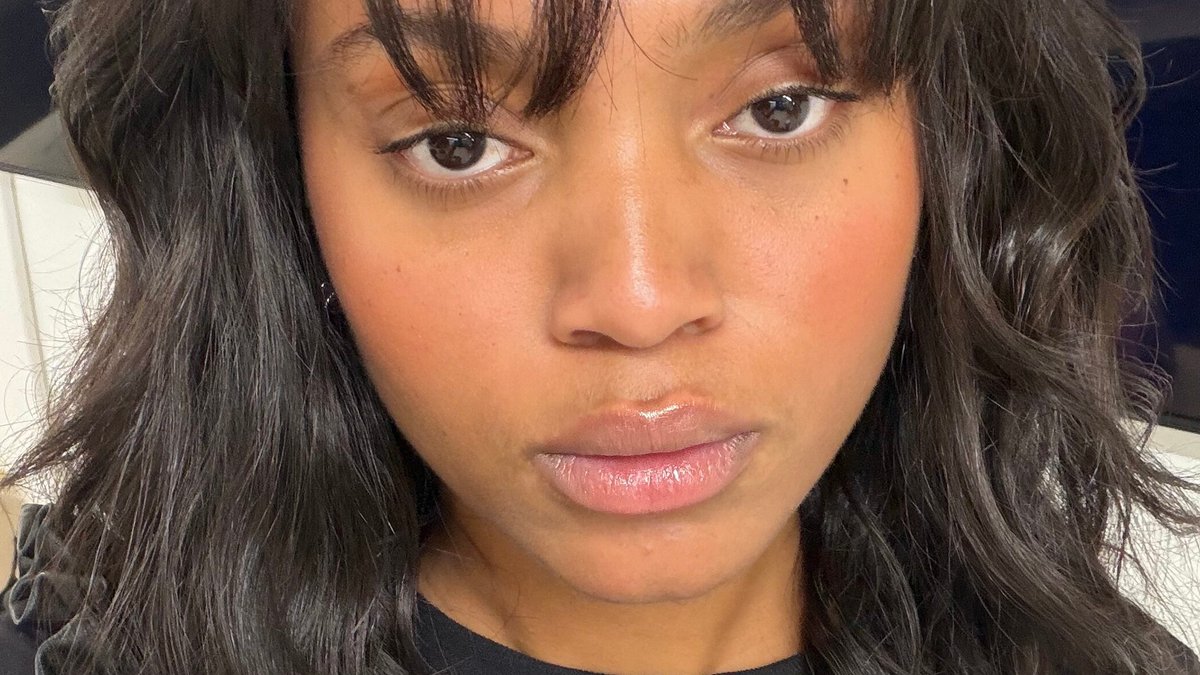
A writer who had spent years believing certain hairstyles were off-limits to her finally took the step of getting a sew-in weave in 2023.
Even as an adult, she defaulted to keratin treatments or big chop transitions, but the restrictions still weighed on her.
Her perspective shifted after attending the Black Hair Reimagined showcase, where she encountered styles that made her reconsider her limitations. She contacted True Indian Hair, a luxury brand specializing in unprocessed human hair, and was connected with Stacy Gray, a hairstylist with nearly 30 years of experience in film, television, and advertising campaigns. Gray became her guide—not just for the installation, but for understanding the cultural and emotional significance behind hair choices for Black women.
The writer entered the appointment with vague ideas, wavy collarbone-length hair, face-framing layers, and left with a full braided sew-in featuring a 5-by-5-inch closure, wispy bangs, and a shaggy finish. The transformation felt like reclaiming a style she’d once assumed was forbidden.
Read Also: Holiday Party Outfit Ideas Highlight NYC Trends
Gray’s approach reflects a broader evolution in Black hair culture. Extensions like sew-ins provide flexibility in length, volume, and texture without permanent changes. For the writer, the experience marked a moment of liberation, though lingering guilt occasionally surfaced when strangers complimented her look.
The appointment became a lesson in community. Gray didn’t just install the weave; she educated, listened, and positioned herself as a trusted resource.
Her experience also highlighted the cultural significance of hair extensions among Black women. While some view sew-ins as a form of self-expression, others balance personal freedom with external judgment. Gray noted that many clients still face resistance from partners or family members who associate extensions with a rejection of natural hair.
The writer’s emotional journey became clearer over time. She described moments of hesitation when strangers praised her hair, wondering whether to correct them or simply enjoy the confidence boost. The guilt stemmed from years of internalized messages about Black hair being inferior, even as she celebrated a style she’d once deemed impossible. Gray reassured her that such feelings were common.
